ICSE Class 10 Electricity and Magnetism — Mock Test (2027)
Free online mock test for Electricity and Magnetism (ICSE Class 10 Physics) — 20 competency-based questions based on the latest CISCE 2027 syllabus, with instant marking. Try the samples below, then take the full test free.
What to expect: This mock test covers key concepts from the Electricity and Magnetism chapter — including application-based and competency-focused questions aligned with how ICSE actually sets the paper.
Tip: Attempt without notes first to identify gaps, then review explanations for any wrong answers. Retake after a few days for best retention.
Sample questions
-
1.A battery of e.m.f. 15 V and internal resistance 2 Ω is connected to two resistors of resistances 4 Ω and 6 Ω joined in series. What is the electrical energy spent per minute in the 6 Ω resistor?
- A.375 J
- B.562.5 J
- C.900 J
- D.1125 J
-
2.Why is the parallel arrangement of electrical devices preferred in household circuits?
- A.It ensures all devices share the same current, reducing power consumption.
- B.It allows devices to operate independently and on the same voltage even if one fails.
- C.It increases the total resistance, making the circuit safer.
- D.It reduces the voltage across each device, prolonging their lifespan.
-
3.Four resistors each of resistance 2 Ω are connected in parallel. What is the effective resistance?
- A.0.5 Ω
- B.8 Ω
- C.1 Ω
- D.0.25 Ω
-
4.Which of the following best describes a solenoid and its magnetic behavior when current is passed through it? (Refer to the figure below)
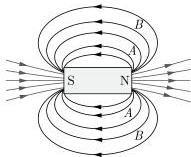
- A.A cylindrical coil of wire that produces a uniform magnetic field inside, with one end acting as North pole and the other as South pole.
- B.A straight wire that generates a circular magnetic field around it when current flows.
- C.A permanent magnet shaped like a cylinder with fixed North and South poles.
- D.A coil of wire that only produces a magnetic field when placed near another magnet.
-
5.In the diagram of an I-shaped (bar) electromagnet shown below, identify the part labelled X and Y that is essential for its operation.
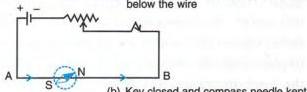
- A.Thin insulated copper wire connected to a battery to carry current
- B.Soft iron bar acting as the core to strengthen the magnetic field
- C.Rheostat used to adjust the length of the solenoid
- D.Ammeter measuring the magnetic strength of the electromagnet
Ready? Take the full 20-question test free — instant marking, no sign-up needed.
▶ Start free mock test