ICSE Class 10 Chemical Bonding — Mock Test (2027)
Free online mock test for Chemical Bonding (ICSE Class 10 Chemistry) — 20 competency-based questions based on the latest CISCE 2027 syllabus, with instant marking. Try the samples below, then take the full test free.
What to expect: This mock test covers key concepts from the Chemical Bonding chapter — including application-based and competency-focused questions aligned with how ICSE actually sets the paper.
Tip: Attempt without notes first to identify gaps, then review explanations for any wrong answers. Retake after a few days for best retention.
Sample questions
-
1.There are three elements E, F, G with atomic numbers 19, 8 and 17 respectively. What is the molecular formula of the compound formed between E and G, and what type of chemical bond is present in this compound?
- A.Molecular formula: E₂G; bond type: covalent
- B.Molecular formula: EG; bond type: ionic
- C.Molecular formula: EG₂; bond type: metallic
- D.Molecular formula: E₂G₃; bond type: coordinate
-
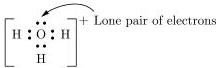
2.In the electron dot diagram of a hydronium ion (H₃O⁺), where is the lone pair of electrons located?
- A.On one of the hydrogen atoms
- B.On the oxygen atom
- C.Between oxygen and hydrogen atoms
- D.There is no lone pair in H₃O⁺
-
3.Which of the following best defines a covalent bond?
- A.Transfer of electrons from one atom to another
- B.Bond formed by equal sharing of electrons between atoms to achieve noble gas configuration
- C.Attraction between oppositely charged ions
- D.Bond formed by unequal sharing of protons
-
4.132. Which set of conditions is necessary for the formation of an electrovalent (ionic) bond?
- A.High ionisation energy, low electron affinity, and small electronegativity difference.
- B.Low ionisation energy, high electron affinity, and large electronegativity difference.
- C.Equal ionisation energy and electron affinity with no electronegativity difference.
- D.High ionisation energy, high electron affinity, and small electronegativity difference.
-
5.Match the column A with column B.
Answer as follows : (i) correct item from B matching sodium chloride. (ii) correct item from B matching ammonium ion, and so on.Column A Column B 1. Sodium chloride (a) Increases 2. Ammonium ion (b) Covalent bond 3. Electro-negativity across the period (c) Ionic bond 4. Non metallic character down the group (d) Covalent and Co-ordinate bond 5. Carbon tetrachloride (e) Decreases
Ready? Take the full 20-question test free — instant marking, no sign-up needed.
▶ Start free mock test